Brooding and pullet cage systemBrooding and pullet cage system
A staged cage environment for first feed and water access, temperature stability and uniform growth through transfer. Front mesh, water height and feed depth are adjusted as the pullet grows.
A staged cage environment for first feed and water access, temperature stability and uniform growth through transfer. Front mesh, water height and feed depth are adjusted as the pullet grows.
01
First-week access
Small birds need a front mesh that prevents escape and a short route to visible water and feed.
02
Adjustable growth path
Drinker height, opening size, feed depth and ventilation are changed by stage rather than left at one fixed setting.
03
Tier comparison
Inspect front and rear cage positions and compare temperature, feed and water consumption across levels.
02 / Equipment details
See each equipment detail in context.
Each catalogue image explains a visible structure or process; pictured configurations are not a fixed supply list.
Product catalogue visual / 01
01 / Equipment details
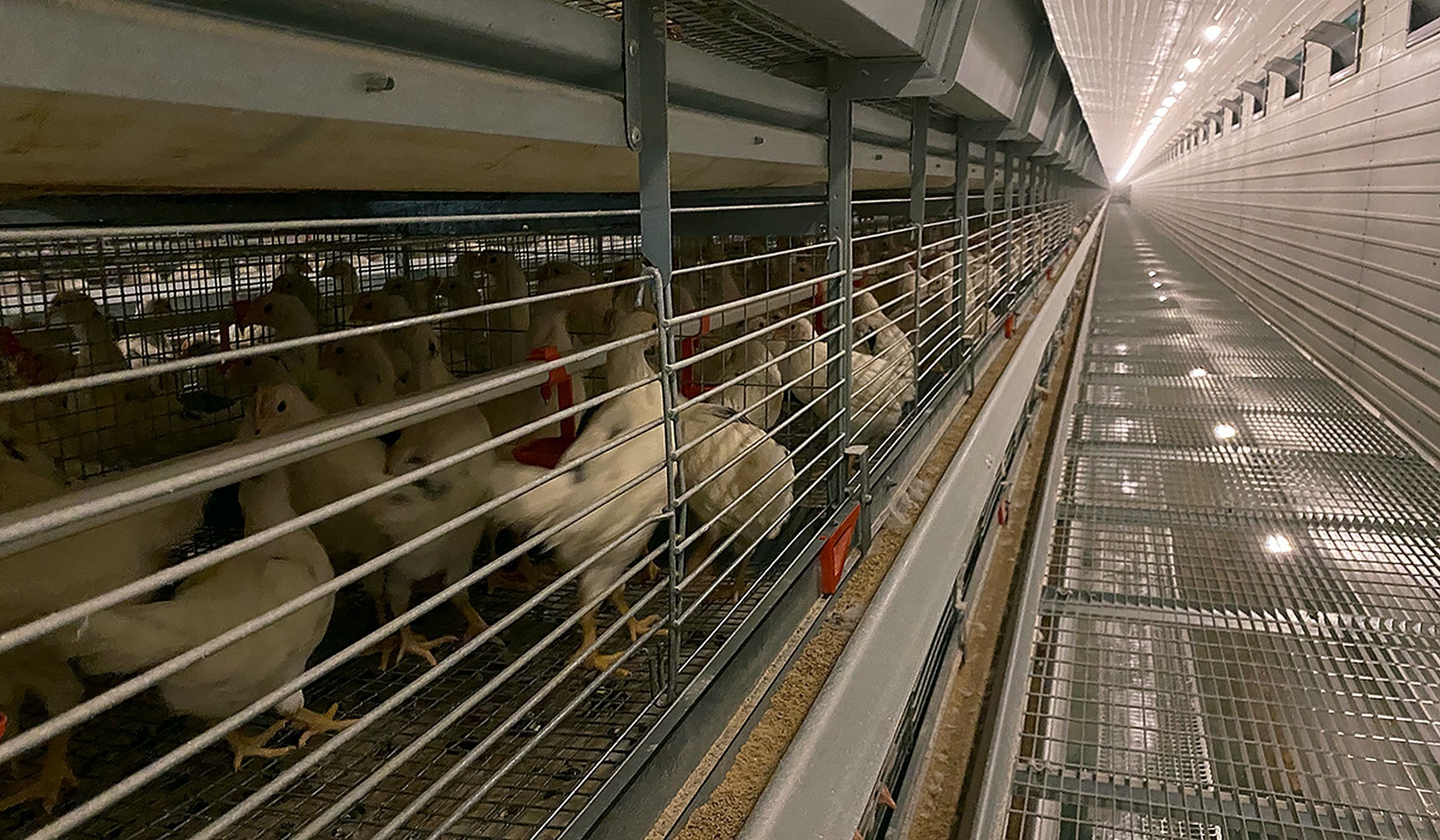
Brooding and pullet rows
The source house view shows tiered rows and the aisle. From brooding to pullet stage, bird reach and space change, so doors, troughs, drinkers and climate cannot be set from one age alone.
Configure for your site:Review opening, feed-water height and transfer timing by age.
Product catalogue visual / 02
02 / Equipment details
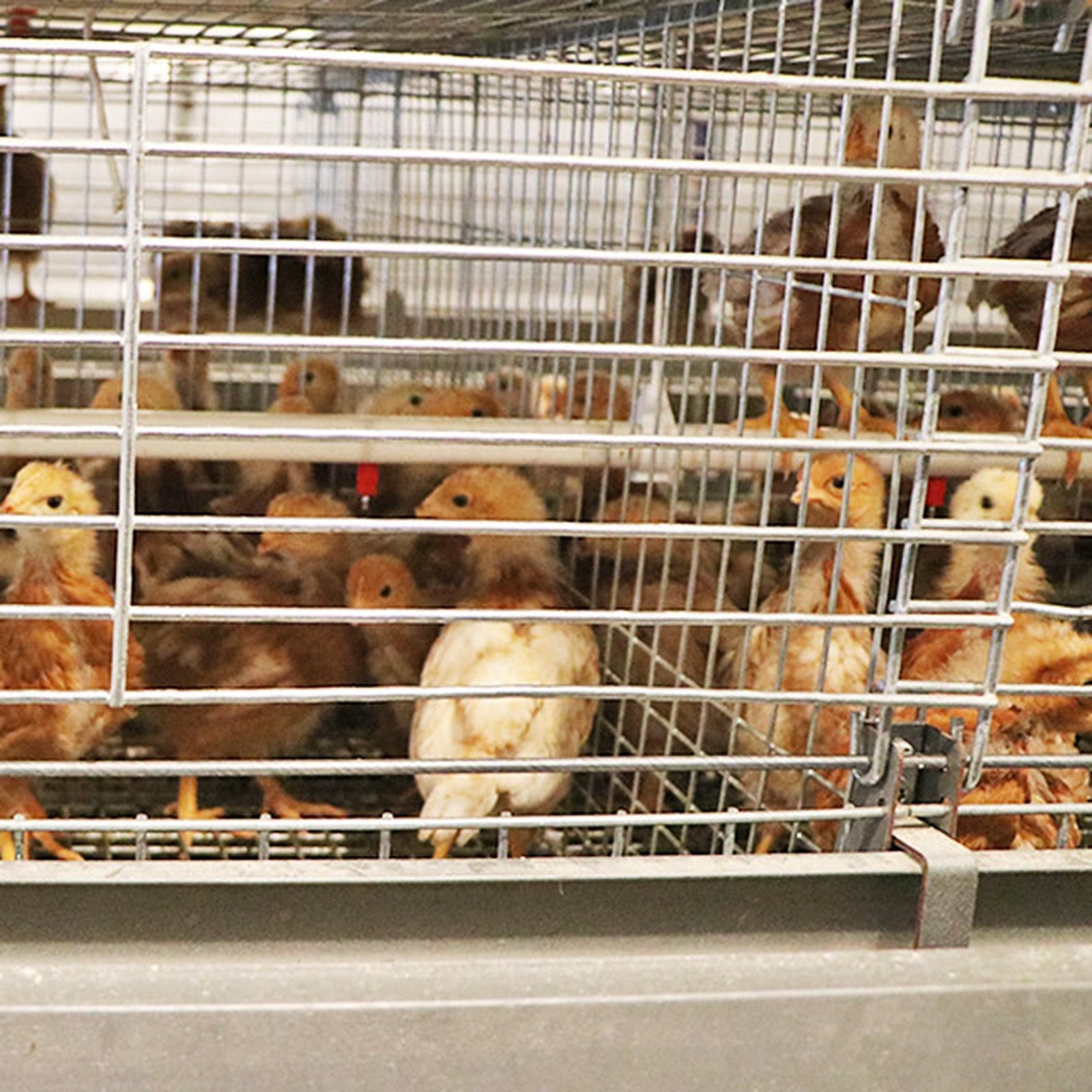
Front mesh and chick access
The close-up shows chicks at the front mesh and trough. Mesh must balance feeding access, observation and containment; the material does not establish one mesh size for every age.
Configure for your site:Confirm first-day bird size, front spacing and adjustment plan.
Product catalogue visual / 03
03 / Equipment details
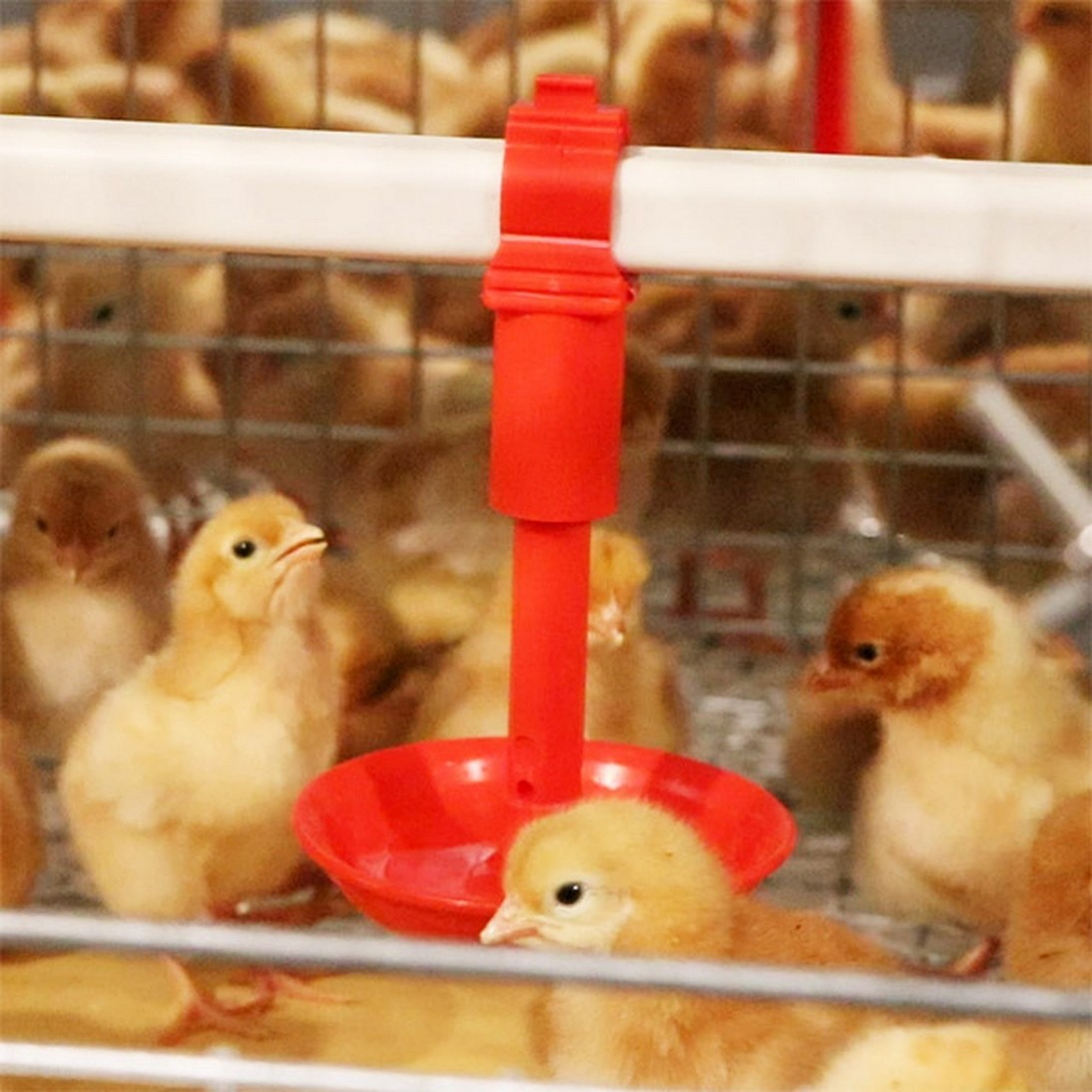
Low drinker position
The drinker image shows its height relative to chicks. On site, pressure, bird reach and leakage should be checked together so one adjustment does not wet the tier.
Configure for your site:Set line height and flushing checks by growth stage.
03 / System connections
How the equipment connects.
Functional connection map · not a construction drawing
01
Preheat and first feed
Make feed and water reachable on arrival.
→
02
Pullet rows
Review mesh, doors and drinkers as birds grow.
→
03
Transfer to next stage
Coordinate transfer to layer or breeder houses.
06 / Configuration scope
Turn a product family into a project specification.
Final model and supply scope are set in a written project specification.
Information to share
01Breed, arrival age and target transfer age
02Door, mesh, trough and drinker adjustment range
03Temperature, ventilation, lighting and backup power