Automatic egg collection and transferAutomatic egg collection and transfer
Eggs move from sloped cage floors onto longitudinal belts, through end lifts and transfer zones, then into a central conveyor or egg room. Every transition is part of the breakage-control design.
Eggs move from sloped cage floors onto longitudinal belts, through end lifts and transfer zones, then into a central conveyor or egg room. Every transition is part of the breakage-control design.
01
Gentle roll-out
Cage-floor slope and front transition keep the egg moving without a long free drop.
02
Belt and lift
Belt tracking, speed and lift entry are checked at the same time to prevent congestion.
03
Central interface
House lines, cross conveyor and egg-room position determine final route and service space.
02 / Equipment details
See each equipment detail in context.
Each catalogue image explains a visible structure or process; pictured configurations are not a fixed supply list.
Product catalogue visual / 01
01 / Equipment details
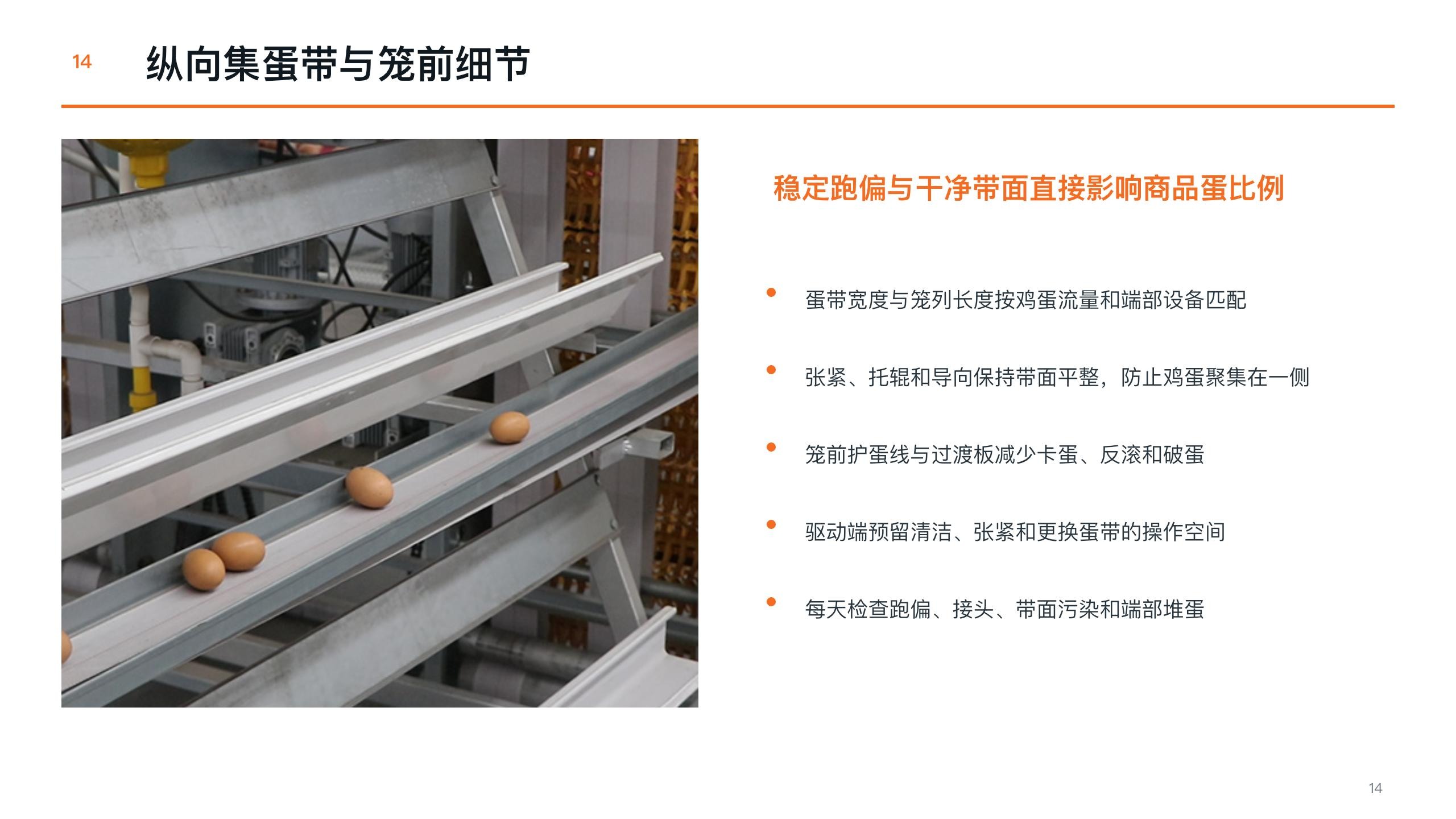
Eggs on the longitudinal belt
The source shows eggs on a longitudinal belt. Belt width, tracking and cage-end handoff are the first critical interfaces from cage to row end.
Configure for your site:Confirm belt material, speed and end entry.
Product catalogue visual / 02
02 / Equipment details
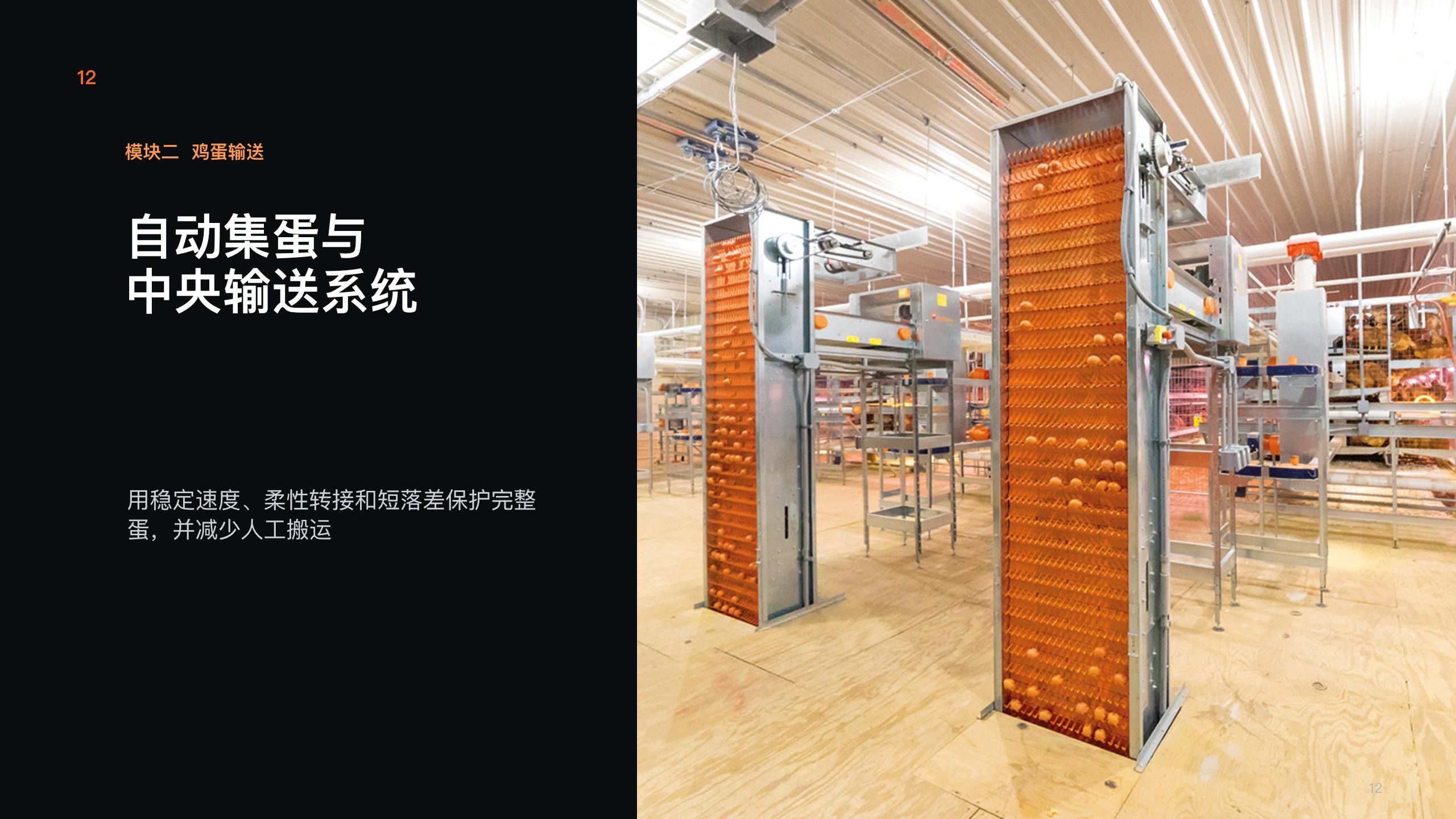
Collection lift at row end
The cover shows an egg-collection lift at the row end, where tier belts converge. Equipment size and aisle clearance follow row count and egg-room direction.
Configure for your site:Check lift height, service clearance and discharge direction.
Product catalogue visual / 03
03 / Equipment details
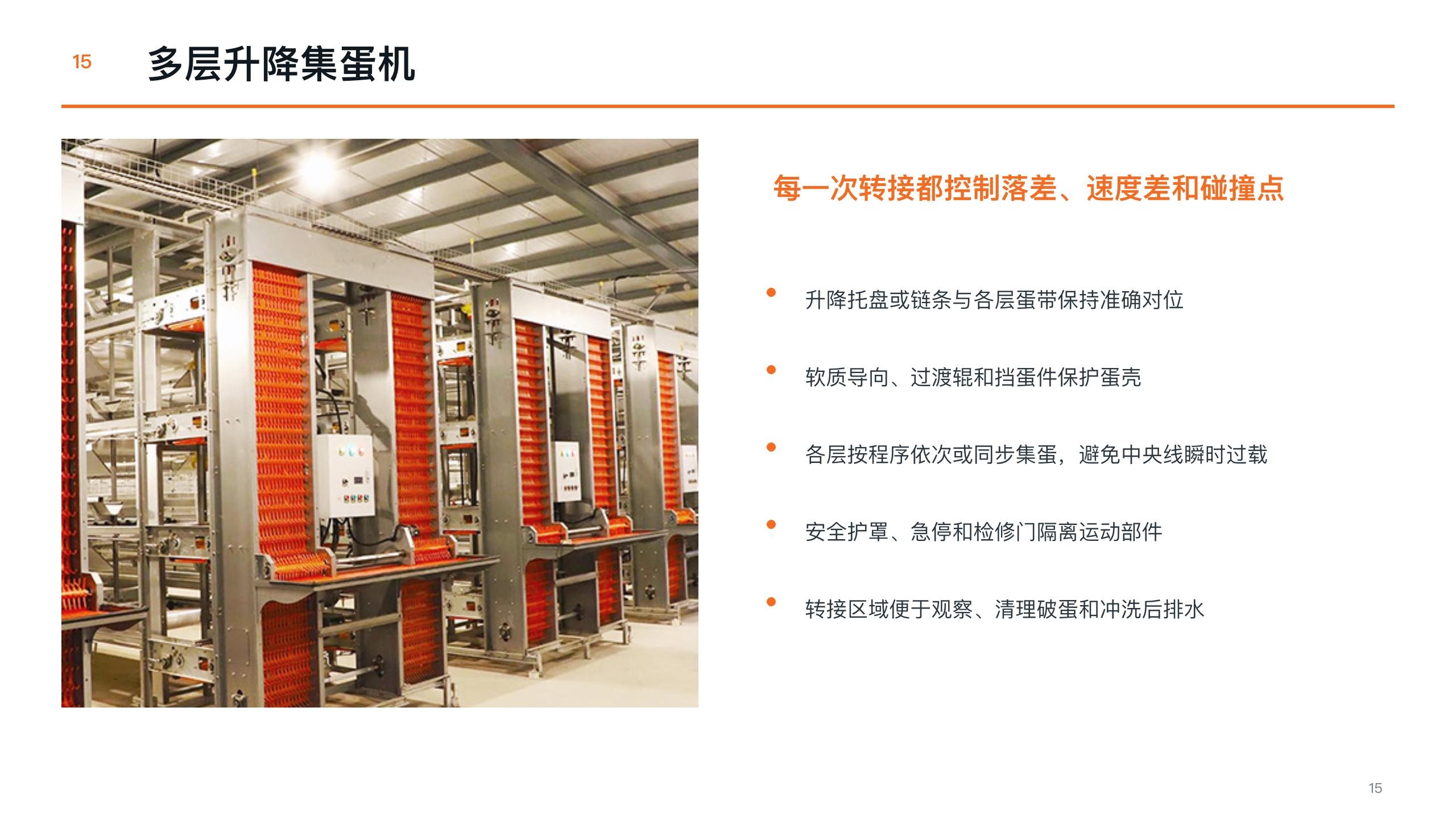
Multi-tier egg lift
The supplied page provides another lift reference. It helps review tier entries and discharge, but it does not establish the same fixed model as the cover.
Configure for your site:Confirm each-tier entry, handoff drop and cleaning.
03 / System connections
How the equipment connects.
Functional connection map · not a construction drawing
01
Eggs at cage front
Move from cage floor to row belt.
→
02
End lift
Merge tiers and change elevation.
→
03
Egg-room direction
Connect to cross conveyor or manual collection.
06 / Configuration scope
Turn a product family into a project specification.
Final model and supply scope are set in a written project specification.