Rabbit breeding and growing cageRabbit breeding and growing cage
Rabbit equipment is divided by reproductive role: doe cages with nest-box access, buck cages with a separate service space, and growing cages for group size and floor support.
Rabbit equipment is divided by reproductive role: doe cages with nest-box access, buck cages with a separate service space, and growing cages for group size and floor support.
01
Doe zone
Nest-box opening, edge protection, observation access and manure path are planned around kindling and nursing.
02
Buck and grower zones
Individual partitions and growing-cage load are selected according to mating workflow and group size.
03
Hygiene
Removable fittings and a defined manure route make cleaning and isolation easier between groups.
02 / Equipment details
See each equipment detail in context.
Each catalogue image explains a visible structure or process; pictured configurations are not a fixed supply list.
Product catalogue visual / 01
01 / Equipment details
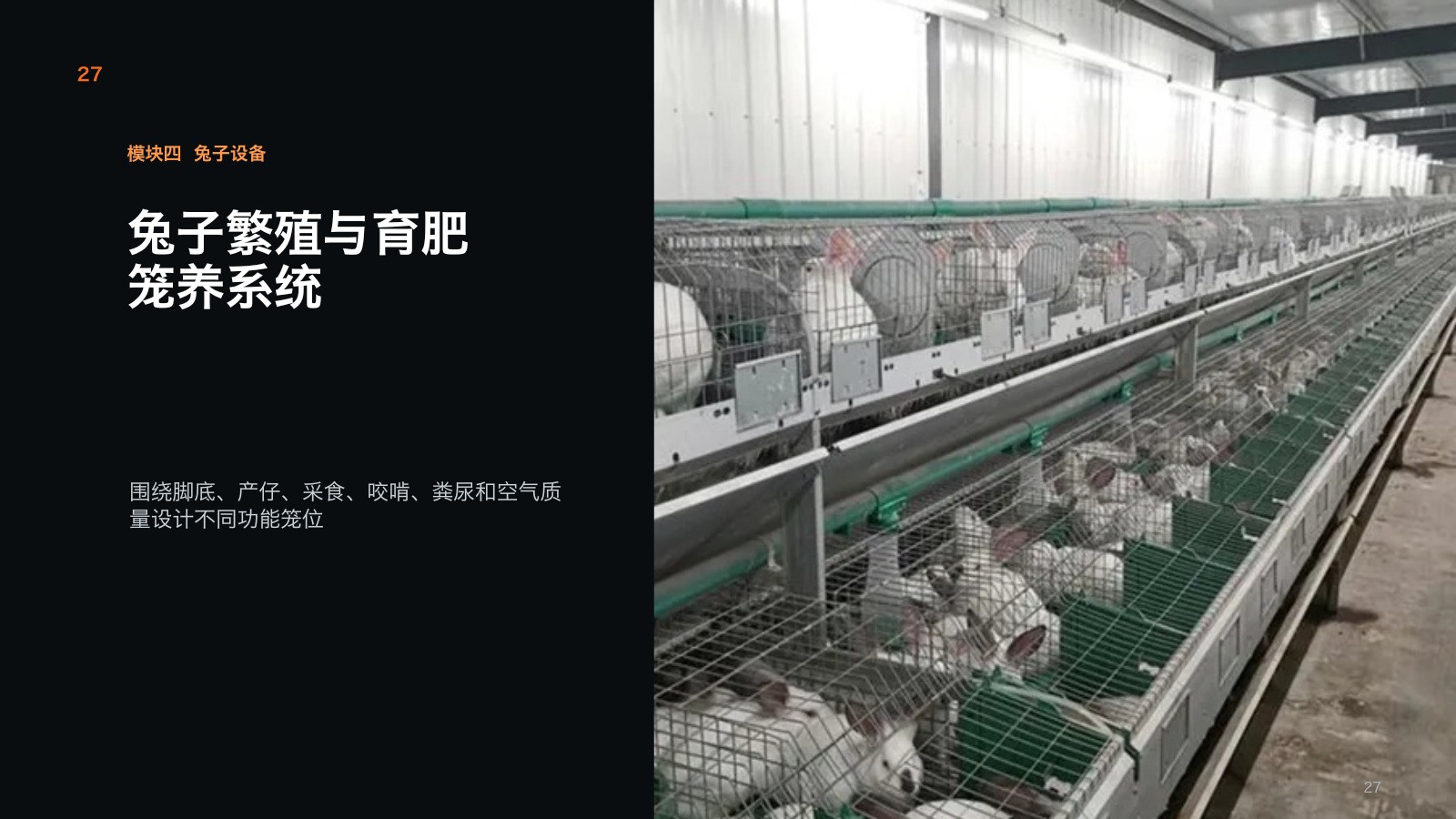
Rabbit-house row reference
The cover shows rabbit rows with a front service lane. Doe, buck and grower positions have different needs; one visible bay does not establish a universal cage dimension.
Configure for your site:Define breeding roles, bay counts and cleaning method.
Product catalogue visual / 02
02 / Equipment details
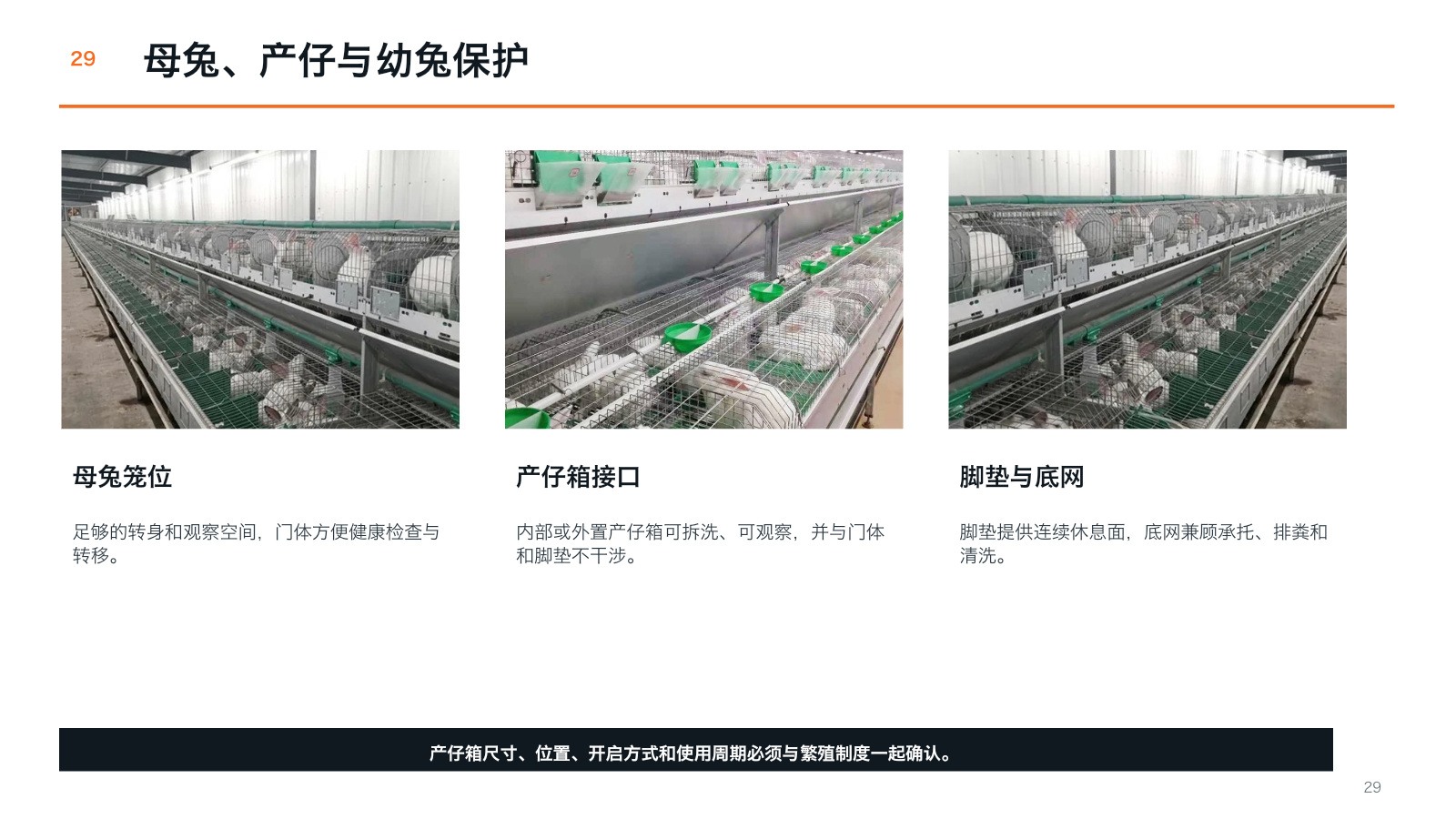
Doe cage front and service parts
The center source image shows the cage-front feed and water parts. The source text mentions a nest-box interface, but the box construction is not clear in the image and requires project review.
Configure for your site:Confirm nest-box count, entry and inspection aisle.
Product catalogue visual / 03
03 / Equipment details
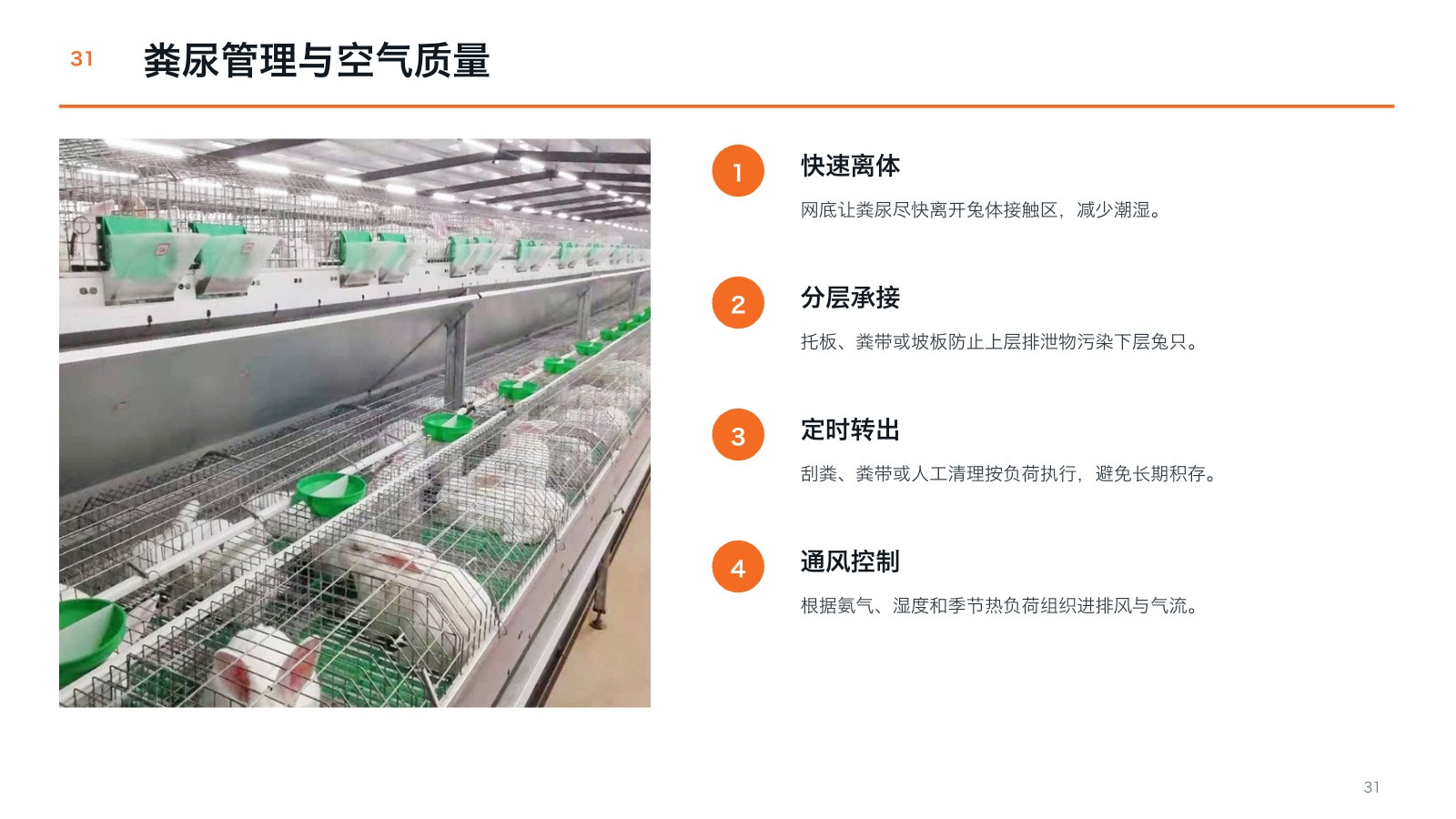
Water, feed and hygiene
The source shows cage-front feed and water details with a lower cleaning zone. Water, trough and waste route should be planned as a maintainable system.
Configure for your site:Confirm drinkers, troughs, urine/manure route and washdown.
03 / System connections
How the equipment connects.
Functional connection map · not a construction drawing
01
Feed and water
Serve doe, buck and grower zones.
→
02
Rabbit cage zones
Configure nest boxes and grower bays by role.
→
03
Cleaning and discharge
Plan waste destination with service aisles.
06 / Configuration scope
Turn a product family into a project specification.
Final model and supply scope are set in a written project specification.